
Blog / Nissan Service

Brake Pad and Rotor Warning Signs for Mays Landing, NJ Drivers

Brake Pad and Rotor Warning Signs for Mays Landing, NJ Drivers

Matt Blatt Nissan - Brake Pad and Rotor Warning Signs for Mays Landing, NJ Drivers

Brake concerns are one of the most common reasons local drivers search for service, and for good reason. Your brakes affect every drive, from quick trips along Route 40 to longer commutes toward Atlantic City, Egg Harbor Township, Galloway, or the Garden State Parkway. If you live or work around Mays Landing, NJ, you may deal with a mix of open roads, traffic lights, school zones, shopping-area congestion, and weekend shore traffic. That variety can place different demands on brake pads, rotors, calipers, brake fluid, and related hardware. Some brake issues arrive gradually, while others appear suddenly, so knowing the warning signs can help you schedule service before stopping performance becomes unpredictable.

Common Signs Your Brakes Need Attention

Brake pads are designed to wear down over time, but driving habits and road conditions can influence how quickly that happens. Frequent short trips, hills, heavy traffic, towing, and repeated hard stops can all contribute to faster wear. Rotors can also develop grooves, heat spots, rust buildup, or thickness variation. When those parts stop working together smoothly, your vehicle may begin to communicate through sound, feel, or stopping distance. Paying attention early helps protect more expensive components and gives a technician a better chance to correct the issue before it spreads through the braking system.

  • Squealing or squeaking: High-pitched noise often means the brake wear indicator is contacting the rotor or that pads need inspection.
  • Grinding: A grinding sound can indicate severe pad wear or metal-to-metal contact that should be checked quickly.
  • Vibration while braking: Pulsing through the pedal or steering wheel may point to rotor thickness variation or surface irregularities.
  • Longer stopping distance: If your vehicle needs more room to stop, the pads, rotors, fluid, or tires may require attention.
  • Pulling to one side: A vehicle that pulls while braking may have uneven pad wear, caliper concerns, tire issues, or alignment-related problems.

Why Brake Inspections Matter Before Replacing Parts

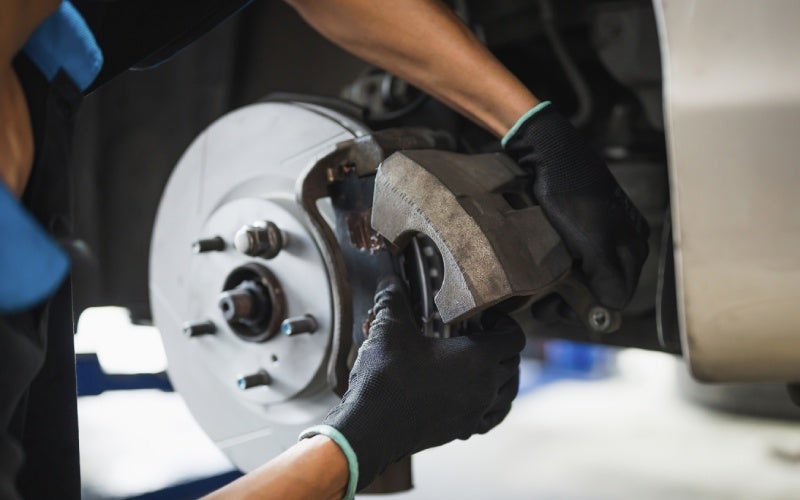
It can be tempting to assume that every brake noise means you need pads, but a careful inspection is the better starting point. A technician can measure pad thickness, inspect rotor condition, check caliper operation, look for uneven wear, review brake fluid condition, and examine visible hardware. This matters because one worn part can affect another. For example, a sticking caliper can wear one pad faster than the others, and replacing pads alone may not solve the underlying issue. Similarly, a vibration may feel like a rotor problem, but tire condition, wheel balance, or suspension components can sometimes contribute to the same sensation.

At Matt Blatt Nissan, our service team uses trained technicians, quality equipment, and a clear inspection process to help drivers understand what the braking system needs. We service all makes and models, and our department supports Nissan owners with genuine Nissan parts when applicable. If your vehicle also needs related maintenance, our Express Service menu includes brake services, tire rotation and balance, battery diagnostic checks, new wipers, air filter replacement, in-cabin microfilter replacement, oil and filter changes, shocks and struts, new tires, and factory scheduled maintenance. Our service department in Egg Harbor Township, NJ is positioned conveniently for Mays Landing drivers who want professional brake care without guesswork.

Brake Pads, Rotors, and Fluid Work Together

Your brake system is more than the parts you can see through the wheel. When you press the pedal, hydraulic pressure moves through brake fluid and helps the calipers press the pads against the rotors. The pads create friction, and the rotors disperse heat. If the pads are worn, the rotor surface is uneven, or the fluid has absorbed moisture, braking may feel less responsive. That is why a complete brake evaluation is valuable. A technician can determine whether the issue is friction material, rotor condition, hydraulic performance, or another related factor. The goal is not simply to stop a noise, but to restore predictable braking feel and safe stopping performance.

Local driving around Mays Landing can also include sudden stops near intersections, varying speeds on rural roads, and heavier traffic when heading toward shore points. Those conditions can make brake feel especially important. If your vehicle is used for family transportation, commuting, rideshare work, local deliveries, or towing a small trailer, routine brake inspections become even more useful. A small change in pedal feel or stopping distance may be easy to overlook during everyday errands, but a trained technician can measure wear and spot patterns before performance declines further.

When to Schedule Brake Service

You should schedule brake service whenever you hear grinding, feel vibration, notice a warning light, smell a hot or burning odor after braking, or sense that the pedal feels soft, low, or unusually firm. You should also schedule an inspection if your vehicle pulls during braking, takes longer to stop, or has been sitting for an extended period. Surface rust can develop on rotors, and while light rust may clear with normal use, deeper corrosion or uneven surfaces may need professional review. If you recently purchased a used vehicle, a brake inspection can also provide a helpful baseline for future maintenance planning.

Many drivers ask whether brake service can wait until the next oil change. Sometimes it can, but symptoms such as grinding, pulling, severe vibration, or a brake warning light should be handled sooner. A brake inspection gives you clear information, including whether service is needed now, whether a maintenance item should be monitored, and whether other components are contributing to the concern. Our advisors can explain findings in a straightforward way so you can make a confident decision based on your vehicle’s condition and your driving needs.

Frequently Asked Questions:

How often should brake pads be inspected?

Brake pads should be inspected during routine maintenance and any time you notice noise, vibration, pulling, or a change in pedal feel. Driving style, traffic, road conditions, and vehicle use all affect brake wear.

Can worn tires make braking feel worse?

Yes. Tires are part of the stopping equation because the brakes slow the wheels, but the tires grip the road. Low tread, uneven wear, or incorrect inflation can increase stopping distance and reduce control.

Do rotors always need replacement with pads?

Not always. Rotor condition, thickness, surface finish, heat damage, and wear pattern determine whether resurfacing or replacement is recommended. A technician can measure and inspect the rotors before making a recommendation.

Can I schedule brake service online?

Yes. Online appointment scheduling is available, and service advisors can help identify the right visit type based on your symptoms and vehicle needs.

Brake warning signs are easier to manage when you act early. If your vehicle squeals, grinds, vibrates, pulls, or simply does not stop with the same confidence, schedule a professional brake inspection. Our service team can evaluate pads, rotors, fluid, tires, and related components, then explain the next steps clearly. For Mays Landing drivers who want dependable service, trained technicians, customer amenities, and practical maintenance guidance, our team is ready to help you return to the road with confidence.
Request more information

Posted in:

Related Posts

check-engine-light-4

What Absecon, NJ Drivers Should Know About Check Engine Light Diagnostics

Matt Blatt Nissan - What Absecon, NJ Drivers Should Know About Check Engine Light Diagnostics A check engine light can create instant uncertainty, especially when your vehicle still seems to drive normally. For Absecon, NJ drivers using Route 30, the White Horse Pike, local school routes, shopping centers, and commuter roads toward Egg Harbor Township or Atlantic City, it is tempting to keep driving and hope the light turns off. Sometimes the issue is minor, such as a loose fuel cap. Other times, the light may point to a misfire, emissions concern, sensor fault, fuel system problem, or drivetrain issue that can get worse if ignored. The best response is not to panic, but also not to guess. A professional diagnostic visit helps identify why the light came on, what systems are affected, and whether the vehicle is safe to keep driving. Why the Check Engine Light Comes On The check engine light is connected to your vehicle’s onboard diagnostic system. When the system detects data outside expected ranges, it stores a diagnostic trouble code. That code is a starting point, not a final diagnosis. For example, an oxygen sensor code may reflect a sensor issue, but it may also be related to an exhaust leak, wiring concern, fuel mixture problem, or engine performance condition. That is why simply reading a code is not the same as diagnosing the vehicle. Our trained technicians use diagnostic equipment, visual inspections, test drives when appropriate, and system checks to confirm the cause before recommending repairs. Drivers often ask whether a steady light is less serious than a flashing one. In many cases, a steady check engine light means the vehicle should be inspected soon. A flashing check engine light is more urgent and may indicate an active misfire that can damage emissions components if driving continues. If the light flashes, reduce driving as much as possible and schedule service right away. If the vehicle shakes, smells unusual, loses power, or makes new noises, it is wise to stop driving when safe and seek assistance. Common Diagnostic Issues for Local Drivers Daily driving around Absecon, NJ often includes short trips, traffic lights, stop-and-go conditions, and repeated engine starts. These patterns can reveal issues that may not appear during occasional highway use. Modern vehicles rely on sensors, modules, wiring, fuel delivery, ignition components, air intake systems, and emissions equipment working together. When one reading is off, the system may respond by turning on the check engine light. Loose or damaged fuel cap: A common cause of evaporative emissions codes, especially after refueling. Ignition coil or spark plug concerns: Misfires can cause rough running, hesitation, poor fuel economy, and a flashing warning light. Oxygen or air-fuel sensor faults: These sensors help manage the fuel mixture and emissions performance. Mass airflow sensor issues: Incorrect airflow readings can affect acceleration, idle quality, and efficiency. Battery or charging concerns: Low voltage can create communication issues or trigger warning lights in modern vehicles. Emissions system leaks: Small leaks in hoses, valves, or seals can set trouble codes even when the vehicle feels normal. Because many symptoms overlap, diagnostics should be handled methodically. A rough idle might involve spark plugs, coils, fuel pressure, intake leaks, engine mounts, software, or other systems. A fuel economy drop may be caused by tire pressure, brake drag, air filters, sensor data, or maintenance needs. A professional inspection helps separate symptoms from root causes, which is especially helpful for drivers who rely on one vehicle for commuting, family schedules, and weekend travel. What to Expect During a Diagnostic Appointment A diagnostic appointment usually begins with a conversation about what the driver noticed. Details matter: when the light came on, whether the vehicle was accelerating or idling, whether fuel was recently added, and whether there are sounds, smells, vibrations, or performance changes. The technician then scans the vehicle for stored codes and reviews live data. Depending on the findings, additional testing may include checking electrical circuits, inspecting hoses, testing fuel and ignition components, evaluating emissions equipment, or completing a controlled road test. Our service center works on all makes and models, and our technicians regularly service Nissan and INFINITI vehicles. We also service diesel vehicles and EVs, so our diagnostic process is built around the specific technology in your vehicle rather than a one-size-fits-all approach. For Nissan drivers, genuine Nissan parts are available when replacement components are needed, and our parts department can help identify the right filters, sensors, batteries, fluids, wipers, maintenance parts, accessories, and repair parts for compatible models. When Express Service Helps and When Diagnostics Are Better Nissan Express Service is designed for fast, convenient maintenance such as oil and filter changes, air filter replacement, in-cabin microfilter replacement, tire rotation and balance, battery checks, brake services, shocks and struts, new tires, new wipers, and factory scheduled maintenance. It is a great fit when routine service is due or a quick maintenance item needs attention. A check engine light, however, often requires deeper diagnostics because the system has stored a fault that needs confirmation. That does not mean the visit needs to feel complicated. Service advisors can explain what was found, whether the concern is urgent, and what repair or maintenance steps make sense. If a multi-point inspection is performed, it can also give you a clearer view of tire tread, brake condition, battery health, fluid levels, and other items that influence reliability. This broader view is useful because a warning light sometimes appears alongside maintenance needs that have been developing quietly. Frequently Asked Questions: Can I drive with a check engine light on? If the light is steady and the vehicle feels normal, you may be able to drive a short distance, but schedule diagnostics soon. If the light is flashing or the vehicle runs poorly, avoid continued driving and seek service promptly. Will disconnecting the battery fix the light? Disconnecting the battery may temporarily clear the light, but it does not repair the cause. The light can return, and clearing codes may remove useful diagnostic information. Is a free code scan enough? A code scan can identify where to begin, but it does not confirm the failed part or underlying cause. Proper diagnostics include testing and verification before repairs are recommended. Do you service non-Nissan vehicles with check engine lights? Yes. Our service department works on all makes and models, including many Nissan and INFINITI vehicles, plus diesel vehicles and EVs. Schedule Check Engine Light Service If your check engine light is on, schedule a diagnostic visit before a small issue becomes a larger repair. Our service center in Egg Harbor Township is convenient for Absecon, NJ drivers and offers certified technicians, online scheduling, a comfortable lounge, Wi-Fi, refreshments, shuttle service, and service financing partners for qualified repair needs. Contact our Service and Parts team at 609-383-6100 or use online scheduling to choose a time that fits your day. We will help you understand the warning light, review the findings clearly, and get your vehicle back to dependable driving. Request more information

battery-4

Battery Testing and Replacement for Galloway, NJ Daily Driving

Matt Blatt Nissan - Battery Testing and Replacement for Galloway, NJ Daily Driving Why Battery Health Matters for Local Drivers A weak battery can turn an ordinary day into an unexpected delay, especially for drivers moving between Galloway, Egg Harbor Township, Absecon, Stockton University, the Garden State Parkway, and the Atlantic City area. Modern vehicles depend on battery power for much more than starting the engine. Keyless entry, push-button start, infotainment systems, driver-assist features, lighting, charging ports, and onboard computers all rely on a stable electrical foundation. When battery output drops, your vehicle may still start one day and struggle the next, which is why testing is important before a complete failure occurs. At our certified service center, we perform battery diagnostic checks as part of a broader approach to vehicle maintenance. A battery test can help determine whether your battery is holding a charge properly, whether the charging system is doing its job, and whether corrosion or loose connections may be affecting performance. This matters for gas vehicles, hybrids, EVs, diesel vehicles, Nissan models, INFINITI models, and other makes. Because we service all makes and models, our team can help households with multiple vehicles keep maintenance organized in one convenient location. Common Signs of a Weak or Failing Battery Battery problems do not always arrive with a clear warning, but many vehicles provide early clues. If your engine cranks slowly, the starter clicks, interior lights dim, or the dashboard battery light stays on, it is time to schedule a battery inspection. A battery that repeatedly needs a jump-start is also signaling a concern that should not be ignored. Sometimes the battery is the issue; other times the alternator, starter, terminals, cables, or parasitic draw may be part of the problem. A proper diagnostic check helps separate guesswork from facts. Slow cranking: The engine turns over more slowly than usual when you start the vehicle. Clicking sound: You hear repeated clicking when turning the key or pressing the start button. Dim interior lights: Cabin lights, headlights, or display screens appear weaker than normal. Battery warning light: A dashboard indicator remains illuminated while the vehicle is running. Frequent jump-starts: Your vehicle needs outside power more than once, especially within a short period. Electrical irregularities: Power locks, windows, infotainment, or accessories behave inconsistently. Galloway drivers often rely on vehicles for school commutes, medical appointments, work routes, errands, and trips toward shore communities. A no-start condition can disrupt all of that. Getting the battery tested when symptoms first appear is far easier than waiting for a tow, a missed appointment, or a vehicle stuck in a parking lot. A diagnostic visit can also reveal whether replacement is needed or whether a cleaning, cable adjustment, or charging system repair is the better solution. Battery Types and Why Correct Fit Matters Not every battery is the same. Nissan Genuine Replacement Batteries are designed to meet original vehicle specifications for fit, performance, and compatibility. Depending on the vehicle, the correct battery may be a standard flooded battery, an enhanced flooded battery, or an absorbed glass mat battery. Start-stop technology, higher electrical loads, and advanced onboard systems can require a battery with specific performance characteristics. Installing a battery that is not suited to the vehicle can create starting issues, shortened battery life, or inconsistent electrical performance. Our technicians can identify the proper battery type, inspect the battery tray and terminals, and confirm that the replacement battery supports your vehicle’s electrical needs. This is especially important in newer vehicles with driver-assistance systems, advanced displays, multiple control modules, and comfort features that draw power even when the vehicle is not moving. Our parts department also provides genuine Nissan parts and knowledgeable guidance for drivers who want components designed for seamless integration and dependable performance. What Happens During a Battery Service Visit A battery service visit is designed to be direct and useful. We begin by reviewing your concern, then test battery voltage and overall condition. Our technicians may also inspect the terminals for corrosion, confirm cable tightness, and evaluate charging system performance when needed. If replacement is recommended, our service advisors can explain the proper battery option for your vehicle. If the battery tests well, we can help identify other possible causes for your starting or electrical concern. Initial concern review: Our advisor notes slow starts, warning lights, repeated jump-starts, or electrical issues. Battery diagnostic check: The battery is tested for condition, charge, and ability to support reliable starting. Connection inspection: Terminals, cables, and visible corrosion concerns are reviewed. Charging system review: Alternator and related electrical performance may be checked when symptoms call for deeper diagnosis. Clear recommendation: Our team explains whether replacement, additional testing, or another repair path is recommended. Battery service also pairs well with other quick maintenance needs. Nissan Express Service can help with oil and filter changes, air filter replacement, in-cabin microfilter replacement, tire rotation and balance, new wipers, new tires, brake services, shocks and struts, and factory scheduled maintenance. Every Express Service includes a complimentary multi-point inspection, giving you helpful visibility into tires, brakes, fluids, filters, and other key systems while your vehicle is already in the service lane. Frequently Asked Questions: How often should a car battery be tested? Testing once a year is a smart habit, and testing sooner makes sense if you notice slow cranking, dashboard warnings, dim lights, or repeated jump-starts. Your service advisor can recommend timing based on vehicle age, battery condition, and driving habits. Do you service batteries on non-Nissan vehicles? Yes. We service all makes and models, including Nissan, INFINITI, diesel vehicles, EVs, and many other brands. Our team can test the battery and review related electrical concerns. Can a weak battery cause a check engine light or other warning lights? Low voltage can sometimes contribute to unusual warning lights or electronic behavior. A diagnostic check helps determine whether the battery is the source or whether another system needs attention. Should I replace my battery before it fails completely? If testing shows poor reserve capacity, weak starting power, or repeated low charge conditions, replacement before total failure can help avoid an inconvenient no-start situation. Schedule Battery Testing Near Galloway, NJ Battery problems are easier to handle when found early. If your vehicle is slow to start, your battery light is on, or your electrical systems feel inconsistent, our service team is ready to help with testing, diagnosis, and replacement guidance. We offer certified technicians, Genuine Nissan parts access, online appointment scheduling, a comfortable customer lounge, shuttle service, and service support for all makes and models. Visit our service department in Egg Harbor Township or schedule online for battery testing near Galloway, NJ, and let our team help you drive with confidence. Request more information

tires-4

Tire Pressure, Rotation, and Alignment Checks for Ocean City, NJ Drivers

Matt Blatt Nissan - Tire Pressure, Rotation, and Alignment Checks for Ocean City, NJ Drivers For Ocean City, NJ drivers, tires do more than carry a vehicle from one destination to another. Tires affect braking distance, steering response, ride comfort, fuel efficiency, and confidence on bridges, causeways, neighborhood streets, and highway routes toward Egg Harbor Township or Atlantic City. A tire can look acceptable at a glance while still having uneven tread wear, low pressure, a developing sidewall issue, or a balance concern. That is why routine tire pressure checks, rotation, balancing, and alignment awareness matter for anyone who relies on a car, truck, SUV, or EV for daily transportation. Why Tire Pressure Matters More Than Many Drivers Realize Correct tire pressure helps the tire contact the road as intended. When pressure is too low, the edges of the tread can wear faster, the tire can generate excess heat, and fuel economy may decline. When pressure is too high, the center of the tread may wear prematurely, the ride can feel harsher, and pothole impact can become more noticeable. Ocean City travel often includes short trips, frequent parking, and repeated transitions from local streets to faster roads, so pressure consistency plays an important role in everyday control. A tire pressure monitoring system can alert you when pressure drops beyond a certain point, but it should not replace periodic manual checks. Pressure can change gradually, and a small difference from tire to tire can influence steering feel. If a tire pressure light comes on, the best next step is not simply adding air and moving on. A technician can check for punctures, valve stem concerns, bead leaks, wheel damage, and tread condition. At Matt Blatt Nissan, we can inspect tires as part of routine service and help determine whether a pressure issue is simple or a sign of something more involved. How Tire Rotation Helps Extend Tread Life Tires do not wear evenly from front to rear. Front tires commonly handle more steering force, and braking can place different demands on each axle. On some vehicles, drivetrain layout also influences wear patterns. Regular tire rotation helps distribute wear more evenly, which can support longer tire life and a smoother ride. If rotations are skipped, one pair of tires may wear faster than the others, creating more road noise, reduced traction, or a need for replacement sooner than expected. Uneven tread depth: A noticeable difference between front and rear tires can affect handling and wet-road grip. Feathering or cupping: Irregular tread texture may point to alignment, balance, suspension, or rotation concerns. Vibration at speed: A tire or wheel balance issue can cause shaking through the steering wheel, seat, or floor. Pulling while driving: If the vehicle drifts left or right on a straight road, alignment or tire condition should be checked. Drivers near Atlantic City, NJ often travel a mix of roads, from local shore routes to the Garden State Parkway and Black Horse Pike. That variety can make tire wear harder to predict. A vehicle used mostly for short local trips may show different wear than one used for longer commutes. Rotation intervals can depend on the vehicle, tire type, driving habits, and manufacturer guidance. A service advisor can help you understand a practical schedule based on your vehicle’s maintenance recommendations. Alignment Checks and What Your Tires Can Tell You Alignment is about the angles of the wheels and how the vehicle tracks down the road. If alignment is off, tires can scrub against the pavement instead of rolling cleanly. That can lead to rapid inner-edge or outer-edge wear, steering wheel off-center concerns, or a vehicle that feels less stable. Alignment can be affected by potholes, curb contact, road debris, worn suspension components, or normal wear over time. Even a small impact can gradually change how a tire wears. Your tires often provide clues. Center wear can indicate overinflation. Wear on both outer edges can indicate underinflation. One-sided wear can suggest alignment concerns. Patchy wear may point toward balance, suspension, or shock and strut issues. Because these patterns can overlap, a professional inspection is valuable. A technician can evaluate tread depth, pressure, visible damage, wheel balance, and related steering or suspension components to help identify the real cause rather than treating only the symptom. When to Consider New Tires New tires may be needed when tread depth is low, sidewalls are damaged, punctures cannot be safely repaired, or age and wear reduce confidence. Tire replacement is also worth discussing when recurring pressure loss, vibration, or traction concerns continue after basic service. The right tire depends on vehicle type, wheel size, driving needs, comfort preferences, and manufacturer recommendations. Our Tire & Parts Super Center carries major tire brands and can help drivers compare options that fit vehicle requirements and everyday use. For Nissan owners, choosing tires that match the vehicle’s engineering can help preserve comfort, handling, efficiency, and braking performance. For other makes and models, proper size, load rating, and performance characteristics remain just as important. A tire that is not well matched to a vehicle can affect ride quality or wear faster than expected. Professional tire guidance can be especially helpful if you drive a sedan, crossover, truck, EV, or SUV with specific tire needs. Frequently Asked Questions: How often should tire pressure be checked? Checking tire pressure about once a month and before longer trips is a smart habit. If the tire pressure light comes on, schedule an inspection to confirm whether air loss is caused by temperature change, a puncture, a valve concern, or another issue. Can I drive with uneven tire wear? Uneven tire wear should be inspected promptly. Depending on severity, it can affect traction, braking, steering, and tire life. A technician can identify whether rotation, balancing, alignment evaluation, or replacement is appropriate. Is tire rotation still needed on all-wheel drive vehicles? Yes. All-wheel drive vehicles benefit from consistent tire maintenance because uneven tread depth can affect handling and drivetrain operation. Follow the recommended maintenance schedule for your specific vehicle. What should I do if my vehicle vibrates at highway speed? Schedule a tire and wheel inspection. Vibration can come from imbalance, tire damage, uneven wear, bent wheels, or suspension concerns. A professional check helps locate the cause. Keeping up with tire pressure, rotation, balance, and alignment checks can make every drive feel more controlled, efficient, and predictable. If you live in Ocean City, NJ or commute through surrounding communities near Atlantic City, NJ, our Egg Harbor Township service location is ready to help with tire inspections, rotations, balancing, new tires, and related maintenance. Schedule service online or contact our Service & Parts Department for professional tire care tailored to your vehicle. Request more information